When AI Knows Quantum Physics
A non-physicist described what they needed. The build platform drew on its own domain knowledge to produce a scientifically correct quantum circuit simulator. 35 of 35 physics benchmarks passed.
The Point
This case study is not about quantum computing. It is about what happens when domain expertise lives in the build platform rather than in the operator.
The person who commissioned this build has no background in quantum physics. They did not specify tensor network simulation, Kraus operators, or von Neumann entropy calculations. They asked for "a quantum circuit simulator." The platform supplied the rest.
The question this raises: how many applications are not being built — not because the technology is hard, but because the person with the idea does not have the domain vocabulary to specify what they need?
What Was Built
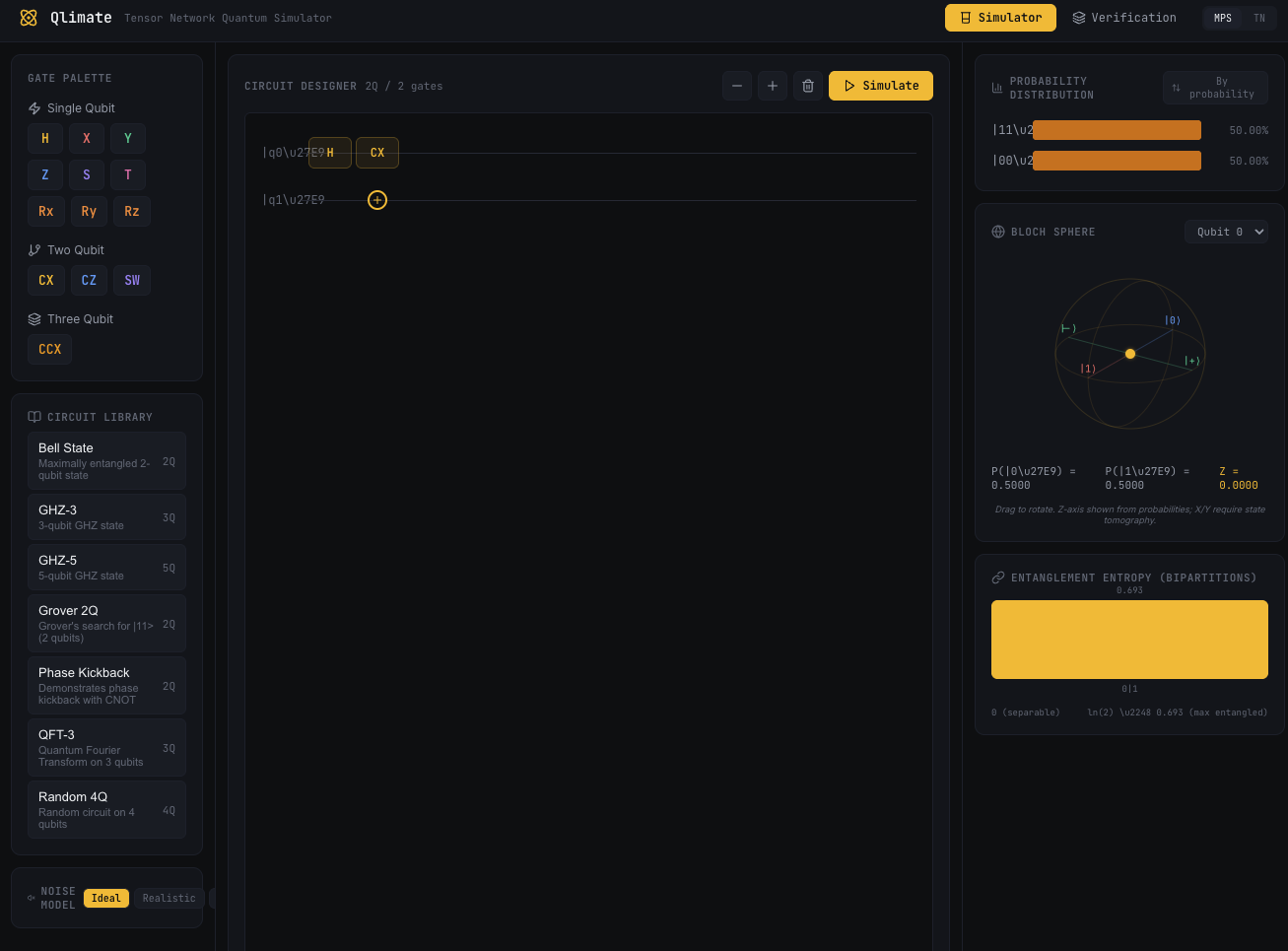
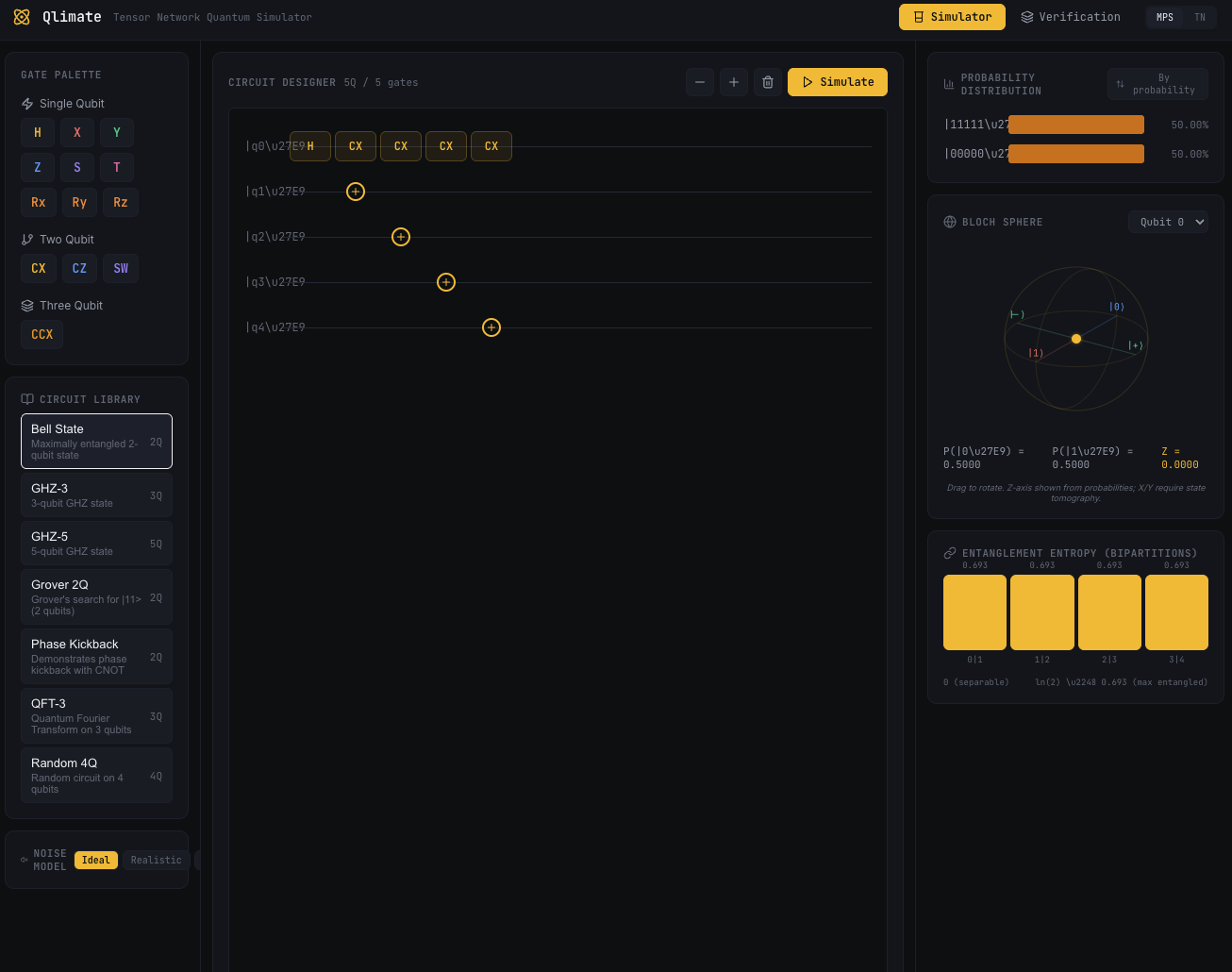
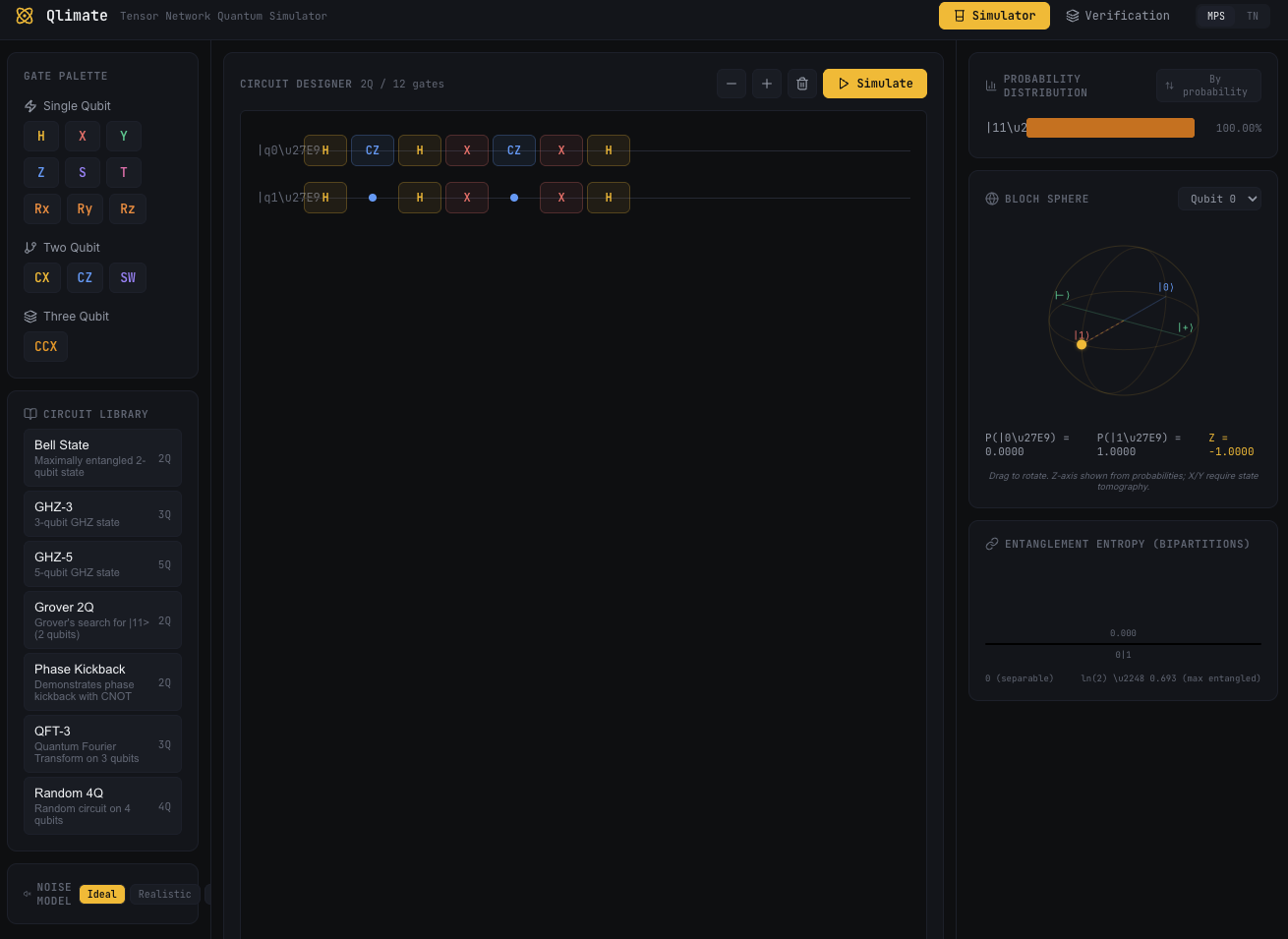
A tensor network quantum circuit simulator with a visual interface. Scientifically correct. Interactively explorable. Built in 45 minutes from a single sentence of intent.
- Tensor network simulation engine with state vector and density matrix representations
- 14 quantum gates (Hadamard, CNOT, Toffoli, Phase, T, SWAP, and more)
- 5 noise channels (depolarizing, amplitude damping, phase damping, bit flip, phase flip)
- Drag-and-drop circuit builder with real-time state visualization
- Bloch sphere rendering for single-qubit state inspection
- Measurement probability display with configurable shot counts
- Circuit persistence with save and load functionality
The Verification
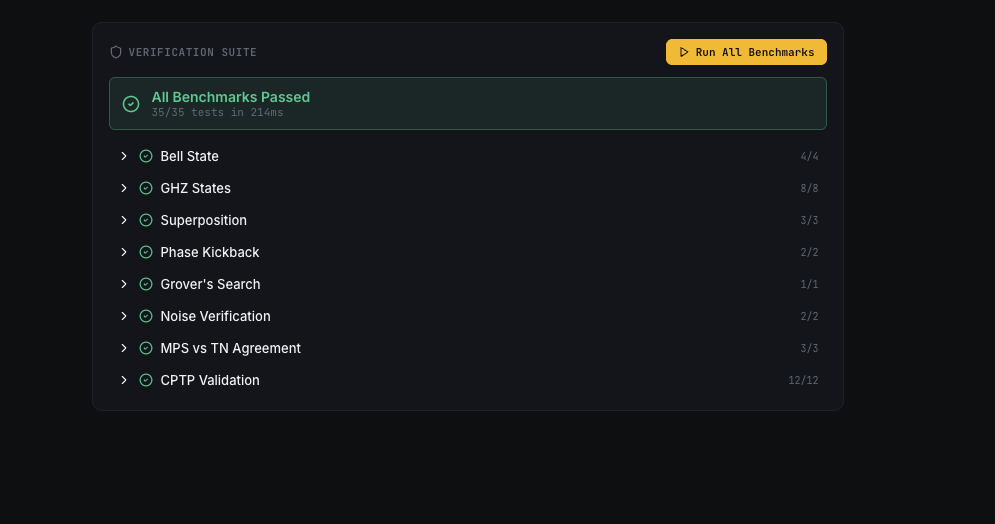
35 physics benchmarks. All passed. These are not unit tests checking that buttons render — they are physics correctness tests verifying that the simulation produces scientifically valid results.
- Bell state generation and entanglement verification (CHSH inequality violation)
- GHZ state preparation across 3, 4, and 5 qubits
- Quantum teleportation protocol — full fidelity verification
- Grover's search algorithm on 2 and 3 qubit systems
- CPTP (Completely Positive Trace-Preserving) validation for all noise channels
- Von Neumann entropy calculation accuracy
- Gate unitarity verification for all 14 gates
- Measurement statistics convergence within expected bounds
What the User Wrote vs What the Platform Knew
User Input
"Build a quantum circuit simulator"
No mention of tensor networks
No mention of noise models
No mention of Bloch spheres
No mention of specific gates
No mention of benchmarks
Platform Knowledge
Selected tensor network simulation as the correct computational approach
Implemented 5 physically realistic noise channels with Kraus operator formalism
Added Bloch sphere visualization for state inspection
Chose 14 gates covering the standard universal gate set
Generated 35 physics benchmarks testing real quantum phenomena
Applied von Neumann entropy for entanglement quantification
The Simulator
The Implication
The constraint on what gets built is no longer technical knowledge. A non-physicist produced a scientifically correct quantum simulator. A non-doctor could produce a medically sound clinical tool. A non-engineer could produce a structurally valid design.
The constraint is knowing what to ask for — and even that constraint is shrinking as the platform learns to infer intent from incomplete specifications.